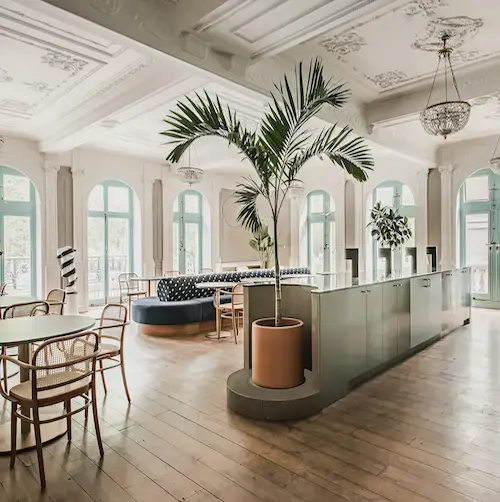
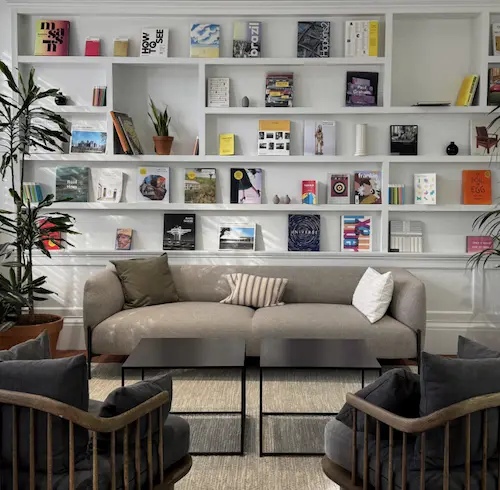
People who feel comfortable, supported, and inspired by their surroundings show higher job satisfaction and are less likely to leave.
When you invest in agile layouts, ergonomic furniture, or flexible policies, you demonstrate that team well-being is a priority.
Productivity and performance
Workspace strategies influence more than aesthetics.
They can reduce distractions, support collaboration, and spark creativity.
Teams that have the right mix of privacy and open areas get work done efficiently.
A poorly planned space can lead to ongoing friction — bottlenecks in communication, difficulty focusing, or lack of proper meeting rooms.
Innovation and collaboration
Innovation thrives in environments that encourage knowledge-sharing and fresh thinking.
Setting up breakout spaces, comfortable lounges, or smaller enclosed areas can prompt teams to connect informally and share ideas.
Alignment with organisational goals
Every business has unique targets.
Some aim to scale quickly and require flexible leasing arrangements.
Others want to foster a close-knit in-office community.
Your workspace strategy should reflect these aims.
If your goal is to expand into new regions or tap into remote talent, a hybrid or flexible model helps.
If you want closer in-person collaboration, a more central physical hub might suit you better.
What’s the difference between workplace and workspace strategies?
People often use “workplace” and “workspace” interchangeably, but they touch on different parts of an organisation’s environment.
Workplace strategies typically focus on broader elements such as company culture, employee policies, and overall experiences that shape how teams interact and collaborate.
Workspace strategies, on the other hand, deal with the physical or digital settings where people work — everything from layout and equipment to technology infrastructure.
Both are essential for a healthy organisation, and understanding each helps ensure that you support your teams effectively on every level.
Core elements of effective workspace strategies
So what makes up a workspace strategy that benefits you and your employees?
Let’s break it down:
1. Functional design
Think about how teams actually work.
Do you need more open-plan areas, or do people do complex tasks requiring privacy?
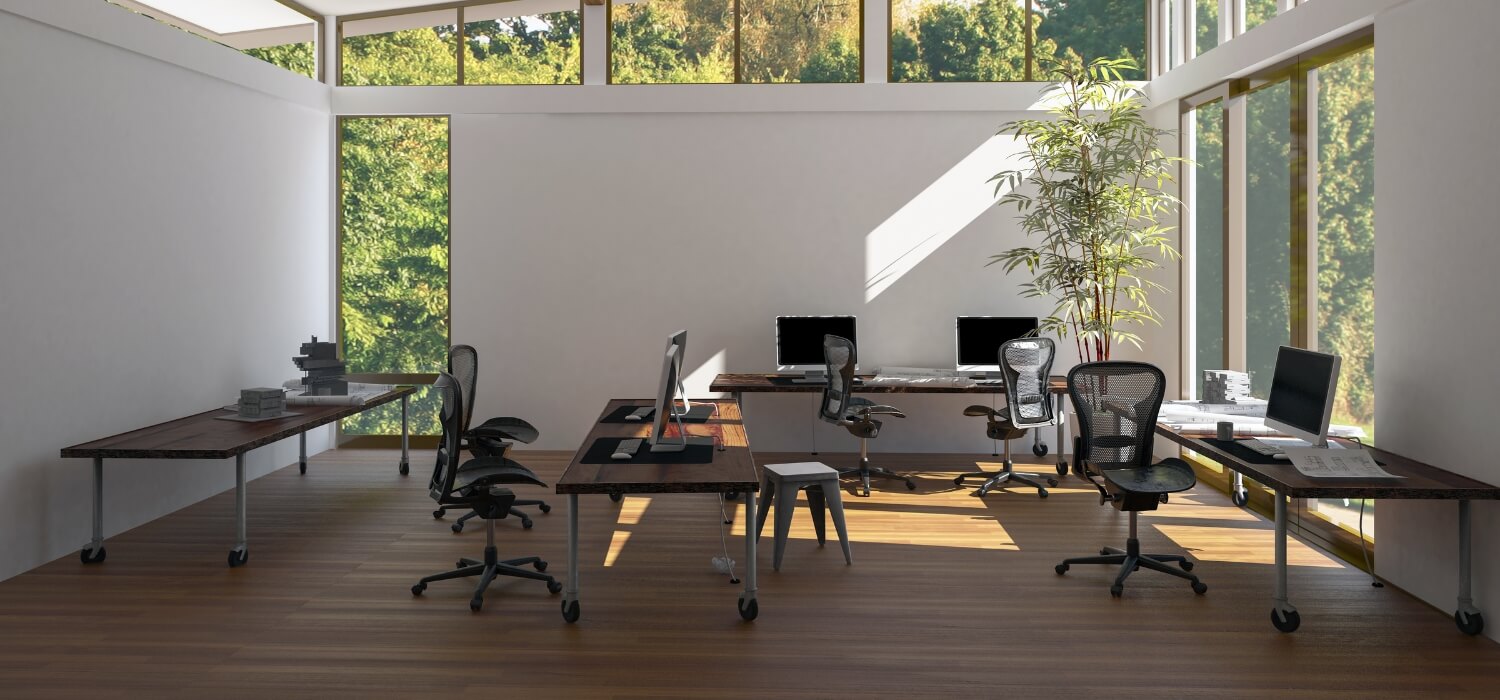
A functional design considers each activity: heads-down concentration, casual chats, brainstorming sessions, and formal meetings.
Cloud-based platforms, seamless video conferencing, and secure networks are vital for collaboration, especially when part of your team is remote.
Offices that lack up-to-date tech can frustrate employees who rely on smooth communication.
3. Flexibility for changing needs
Teams grow, contract, or pivot to new products.
Buildings, leases, and desk arrangements must handle these shifts.
Hot-desking, adjustable meeting spaces, and modular furniture offer the agility to adapt quickly.
A static layout can become outdated within months if your business evolves faster than expected.
4. Employee well-being
Back and neck pain from poor chairs or screen setups harms productivity.
Ergonomic considerations for DSE equipment — height-adjustable desks, chairs with lumbar support, and screens at eye level — improve comfort and reduce injuries.
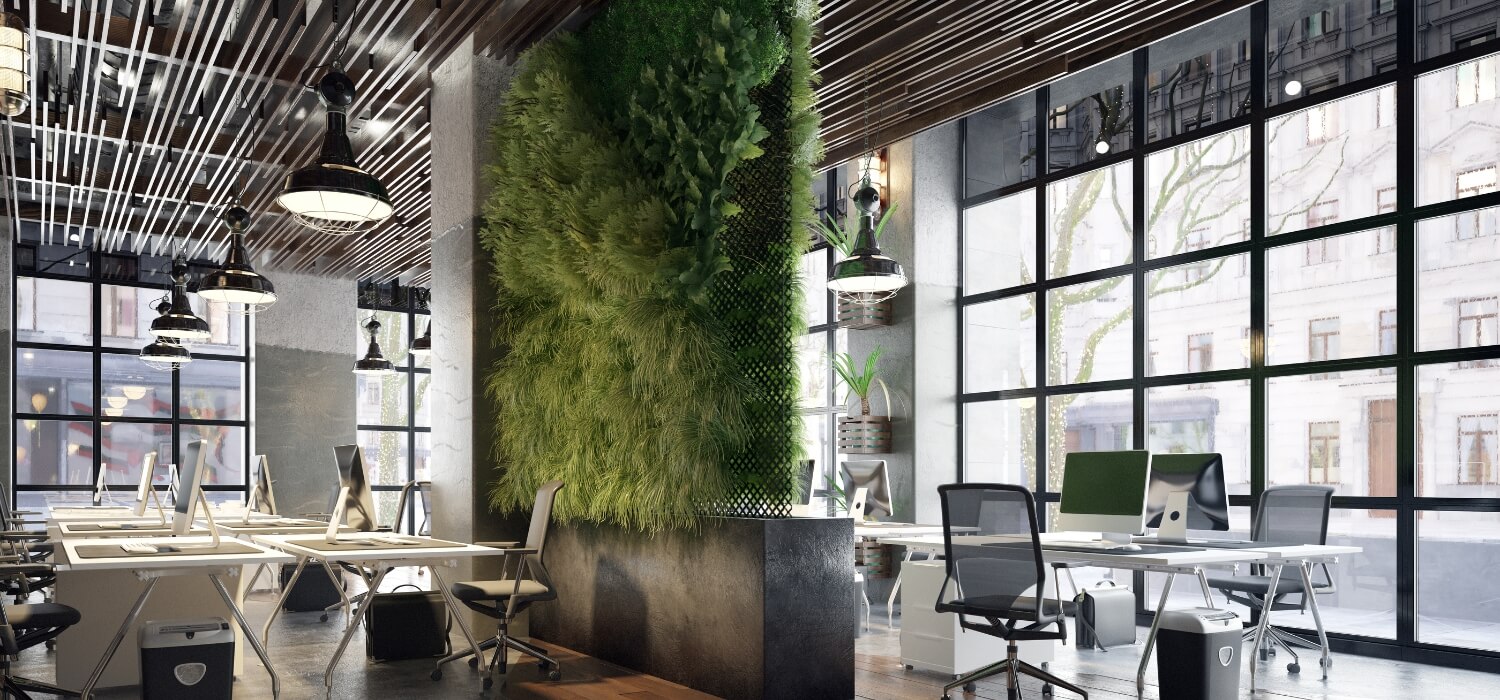
Access to natural light, plants, and fresh air also boosts mood and energy levels.
5. Culture and collaboration
A space that reinforces your culture is especially helpful if you’re trying to strengthen certain values, like transparency, collaboration, or creativity.
If cross-functional teaming is a focus, design for chance encounters and multi-use rooms.
If you have a structured hierarchy, you might prefer designated areas for certain departments.
What are the 3 main workspace strategies?
There are three core workspace strategies to choose from — here, we break them down so you can decide which is best for you and your team:
1. Fully office-based
A fully office-based approach keeps your entire workforce on-site.
This strategy often suits organisations that rely heavily on in-person coordination, provide services that can’t easily move online, or have confidentiality concerns.
An on-site workforce promotes daily face-to-face connections and allows leaders to see projects evolve in real time.
Advantages:
Immediate collaboration and problem-solving.
A consistent environment for mentoring and on-the-spot learning.
Access to all on-premises facilities, from hardware to specialised equipment.
Challenges:
Commuting time and travel costs for employees.
Limited ability to recruit from diverse locations.
Potential difficulty for employees who need flexible arrangements.
Although some question whether fully office-based strategies remain relevant, there are scenarios where they fit perfectly.
Industries that handle sensitive data or large-scale physical infrastructure often rely on a dedicated workspace.
Leaders in manufacturing, specialised design labs, or certain government roles may find a central hub unavoidable.
2. Fully remote
Fully remote strategies gained traction thanks to modern video conferencing and digital collaboration tools.
If your business model allows it, remote setups let you recruit without geographic limits.
You can reduce or eliminate office overheads, which can be reinvested into equipment, salaries, or business growth.
Advantages:
A broader talent pool from different cities and countries.
Lower operational costs if you scale down physical office space.
Greater autonomy for employees, which can boost morale.
Challenges:
Potential sense of isolation if team members rarely meet in person.
Variations in time zones can complicate coordination.
Over-reliance on digital tools can lead to fatigue if not managed carefully.
Remote setups work best when supported by strong communication practices and clear guidelines.
Regular virtual stand-ups, scheduled in-person retreats, or coworking passes can help build rapport and overcome issues like loneliness.
3. Hybrid (office and remote)
Hybrid strategies are a middle ground, combining elements of office-based and remote work.
They respond to employees’ preferences for flexibility and employers’ needs for face-to-face collaboration.
Many businesses test various hybrid models before finding a rhythm that suits everyone, like:
Time-based hybrid: Specific days for on-site work (e.g. Tuesdays and Thursdays), and the rest remote.
Set-day hybrid: Teams coordinate fixed in-office days for group projects and rely on remote work for individual tasks.
Preference-based hybrid: Employees choose freely where they work, often coordinating with managers on important in-office commitments.
Advantages:
Balances in-person relationship-building with remote focus time.
Suitable for roles that occasionally need face-to-face contact (e.g. brainstorming, product demos, or large team activities).
Can accommodate employees with different work styles or personal responsibilities.
Challenges:
Coordination can be tricky if schedules clash.
Risk of an “in-group” (those in the office) and an “out-group” (those remote) if communication isn’t inclusive.
Policy clarity is crucial. Without it, confusion arises around who should be on-site and when.
Organisations testing hybrid models often emphasise transparent scheduling tools, shared calendars, or “core hours” when everyone must be available.
This consistency prevents misunderstandings and encourages teamwork.
The latest trends driving workspace strategies
As our approaches to work change with current trends, so do our workspace strategies.
Each of these are an addition to your potential workspace strategy:
Activity-based working (ABW):ABW offers different zones for varying work styles — quiet booths for focus, open tables for quick chats, and comfortable pods for collaboration. This strategy aligns well with businesses that encourage autonomy.
Hot-desking: Hot-desking means staff don’t have assigned desks. Instead, they pick any available spot upon arrival. It can save space but might feel impersonal if overused. Many co-working and serviced offices adopt hot-desking to allow maximum flexibility.
Flexible leases and on-demand spaces: Some businesses reserve access to shared offices or co-working spaces rather than signing long-term contracts. This approach limits overheads and allows swift relocation if you expand or downsize.
Wellness-focused offices: Biophilic design (integrating natural elements), healthy ventilation systems, and social areas for breaks are all part of an emerging focus on mental and physical well-being. Companies that invest in these features see gains in employee energy and a reduction in burnout.
How to make your workspace better
Improving your workspace means designing an environment where teams can truly thrive.
That’s why we’ve broken it down into practical steps for assessing your current setup, defining clear goals, and introducing flexible elements that support both productivity and well-being.
When you tune each detail to fit your organisation’s needs, your workspace becomes a space that grows right alongside your ambitions.
1. Assess your current setup
Start with an honest review.
Notice what works and what doesn’t:
Are there persistent complaints about noise levels?
Do people struggle to find meeting rooms?
Is outdated equipment slowing tasks?
Gather feedback through surveys, focus groups, or informal chats.
Align them with your broader business strategy to ensure consistency.
3. Plan for flexibility
The modern workplace evolves quickly.
New clients, fresh projects, and shifting regulations affect space needs.
Avoid rigid layouts or lengthy leases without contingency plans.
If you lease an office, consider shorter-term or flexible contracts.
If you buy furniture, choose modular pieces you can rearrange.
4. Integrate technology thoughtfully
Robust WiFi coverage, smooth video conferencing, and collaborative apps are essential for any strategy.
If half your team dials in from home, invest in high-quality conference setups that keep communication clear.
Outdated or patchy technology hampers productivity and frustrates staff.
5. Focus on employee well-being
Ergonomics, lighting, temperature control, and air quality matter.
Comfortable employees work better and experience fewer health issues.
If possible, introduce greenery or breakout areas to foster relaxation.
Look at modern co-working spaces for design inspiration — they often feature airy layouts, pleasant décor, and a variety of seating options.
6. Provide quiet zones and collaboration areas
Teams need both.
Allocate quiet zones for detailed tasks.
Dedicate collaboration areas with whiteboards or brainstorming tools.
A balanced layout supports the many ways people focus and interact throughout the day.
7. Communicate policies clearly
Whether you adopt a hybrid, fully remote, or fully in-office strategy, outline clear guidelines.
Who comes in on which days?
How do you book meeting rooms or desks?
What’s the expected response time to messages?
When these policies are transparent, misunderstandings decline.
8. Encourage social connection
People crave human interaction, especially in remote or hybrid setups.
Organise team lunches or on-site get-togethers.
If your workforce is geographically dispersed, schedule virtual hangouts or celebrate milestones online.
Familiarity and friendship foster stronger teamwork.
9. Iterate and improve
A workspace strategy is never set in stone.
Gather feedback, track usage patterns, and adapt.
If hot-desking leads to daily confusion, try designated zones or partial desk assignment.
If weekly remote days cause communication lags, restructure them or refine your process.
Listen to your team and be prepared to pivot.
Next steps to implement your workspace strategy
Workspace strategies are more than a matter of choosing desks or signing leases.
They reflect deeper objectives around collaboration, productivity, talent attraction, and overall well-being.
An approach that works for one organisation might not suit another.
That’s why clarity on your goals, coupled with open dialogue with employees, is essential.
Give your team a comfortable, modern space — whether fully on-site, remote, or a blend of the two.
Equip them with the right tools, define workable policies, and cultivate a culture of trust.
Start with a thorough review of your existing environment, clarify your aims, and plan for flexibility.
Combine functional design with strong technology and supportive policies.
Gather feedback and iterate regularly.
You’ll see tangible improvements in morale, retention, innovation, and business resilience.
A smart workspace strategy stands at the intersection of design, leadership, and culture.
It’s a powerful lever for shaping the future of your organisation and giving your people a place — digital or physical — where they can truly flourish.
By applying the steps outlined here, you’ll be on your way to creating a workplace that aligns with your business vision and empowers your team to do their best work.
Explore office space in London
Priority neighbourhoods with deep coverage across the city.
Laura Beales is the Co-Founder of Tally Workspace, bringing a unique blend of financial expertise and real estate knowledge to the office space industry. A qualified Chartered Accountant, Laura began her career in finance but transitioned into commercial property after experiencing first-hand the inefficiencies and lack of transparency in the market from a customer perspective.
From first office to scale-up headquarters, we have been there.
Secured a 14,000 sq ft CAT A leased HQ at White City Place
Introduced to 3 specialist fit-out partners, including Thirdway
Full market review spanning White City, Hammersmith & Soho
"Much like Butternut Box's brand, the project intent has been to pair a deeply human playfulness with elevated, premium design. Together we've crafted a joyful space which can bring out the best in all users, whether they be two or four legged."
"Tally helped us find our new office at lightning speed. Jules, Laura, and the team are the best at what they do. We wanted a rooftop, natural light, a central location, and a good deal. They got us 10+ solid options within 48hrs and scheduled all the viewings. We found our new space within 2 weeks."
Full market review across serviced, managed and leased office options
Custom layout designed by a workspace specialist - at no extra cost
Secured a self-contained 1,850 sq ft space in Leicester Square
"Tally Workspace exhausted the market and found us just what we were looking for within weeks. They were a breath of fresh air, extremely knowledgeable and helpful, and even assisted with design and fit-out. Very proactive at every stage, like an extension of our own team."
Secured a 2,000 sq ft self-contained HQ in Shoreditch
Workspace designer sourced and managed as part of the service
Used Tally Workspace on-demand between offices
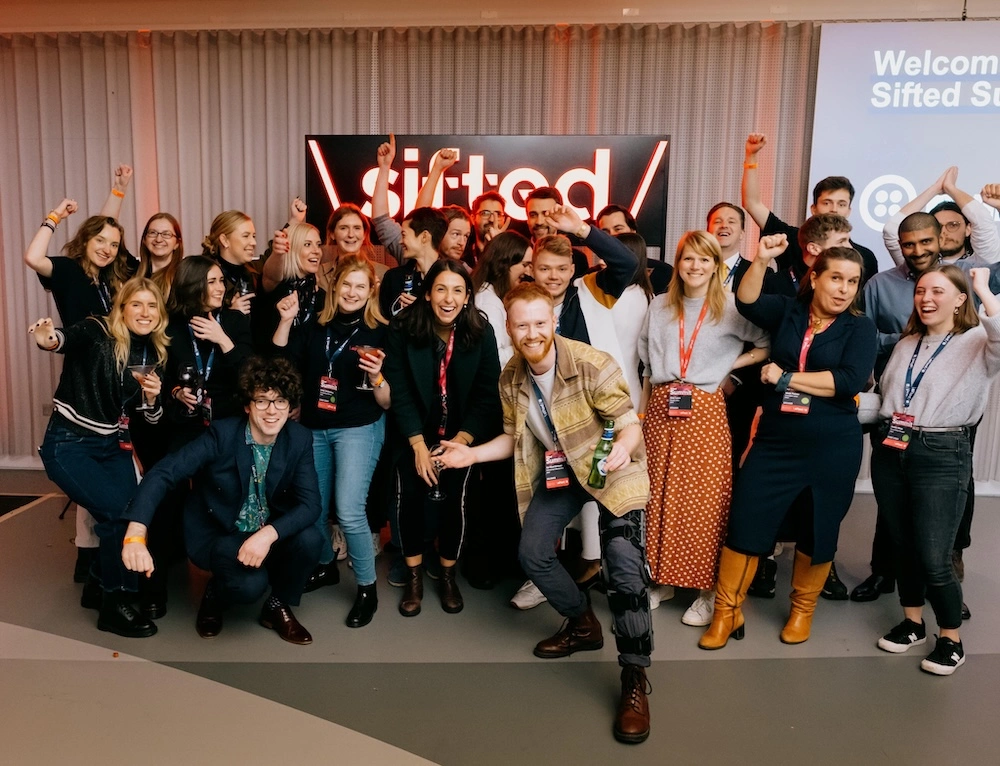
"Tally Workspace has been an incredible help for Sifted. From understanding the office/remote first landscape to finding the right office for all of our requirements."
Shortlisted options across Marylebone, Victoria, Waterloo & Holborn
Secured a 60-desk office with internal meeting rooms in TCR
"You made this whole project smooth and actually enjoyable. You're well connected, which opened up options we wouldn't have found ourselves. I'm confident we would have missed this fantastic opportunity without your help, and you secured us a much better price than we could have achieved directly."
"I'd say it is a no brainer! A win win to use Tally Workspace to find your next space. No additional cost but endless extra value."
Founder & Lightning
"Not only are they very knowledgeable about the market, but they're lovely people to deal with. We're so happy with our final choice and can't wait to move!"
Finance Unlocked
"The space they found was perfect for our team, with loads of amazing breakout space, beautiful meeting rooms and a real emphasis on wellbeing."
Florence
"They got us 10+ solid options within 48hrs and scheduled all the viewings. Highly recommend. We found our new space within 2 weeks."
Cryptio
How Tally Workspace works
Tell us what you need
Team size, budget, location, and deal breakers. We'll ask about the things most people forget too.
searching...
We handle the search
We search our proprietary database then call landlords directly about unlisted spaces. Often back to you within a day.
We handle the detail
Contracts are where most searches fall apart. We review everything and negotiate before you sign.
You move in confident
Best space, best terms, timeline that fits your growth. You know exactly what you're signing.
Tell us what you're looking for
Find an office today
Using our extensive mapping of startup and scaleup office space, find an office that fits your needs and your culture in just a few minutes.