A virtual office offers businesses a professional address and operational services without the need for a permanent workspace.
This model helps companies reduce overhead costs while maintaining flexibility for remote work.
Utilizing a virtual office can enhance a business's credibility and brand image in new markets.
A virtual office provides remote-working businesses with a professional address, communication options, and key operational services without tying them to a traditional, permanent workspace.
It’s a gateway for freelancers, entrepreneurs, and established businesses to project competence and credibility to clients while enjoying a flexible approach to work.
Every year, more companies switch to virtual offices because this model offers a way to cut overheads and stay focused on core activities.
This growing popularity stems from continuous improvements in technology, shifting cultural attitudes towards remote work, and the wide variety of services that can be bundled with a virtual office package.
The term “virtual office” has spread far beyond the startup world.
Traditional companies also see that having a virtual office address opens doors in new markets.
For example, a virtual office provider in London can enable a firm based in Manchester, Birmingham, or overseas to gain a prestigious base in the capital.
This concept is an opportunity to test a new region, attract local clients, and maintain brand presence — all without the commitment of leasing and furnishing an entire building floor.
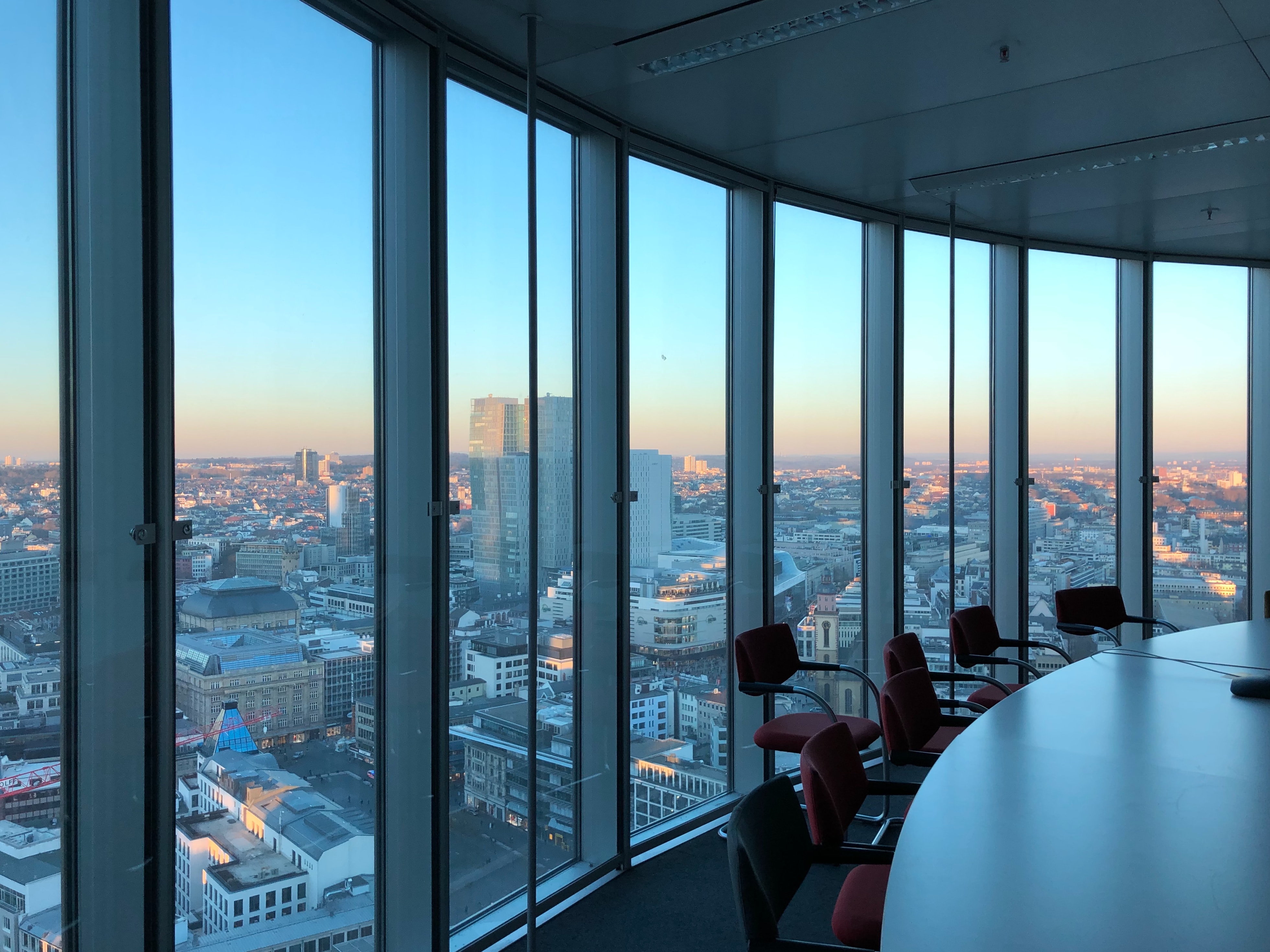
Meeting room with a view
What is meant by a virtual office?
A virtual office is a combination of professional services, technology, and administrative support that gives a business an operational presence.
It revolves around a central service provider that can supply a credible virtual office address, mail handling, phone services, and on-demand meeting rooms.
The absence of a permanent, physical workspace saves money, makes it easier to scale, and supports remote or hybrid working setups.
A good provider will offer multiple package options and add-ons, which helps businesses pick only the features they need.
How does a virtual office work?
A virtual office works by allocating you a professional address — often in a well-known building or area — and then forwarding mail or storing it for collection.
Calls can be routed to an existing phone line, answered by a receptionist, or redirected to voicemail.
Many virtual office services include scheduling and administrative assistance.
For instance, you can secure meeting rooms in the same building or have the option to rent hot desks as needed.
The core goal is to project reliability and professionalism, while operating day-to-day from anywhere.
Several businesses find this approach valuable because it erases geographical barriers.
You can manage your company from home, a coworking space, or multiple locations.
Meanwhile, all client-facing communications reflect an established base.
If the chosen provider happens to be in a prime location — such as a virtual office in an iconic London building — it strengthens the perception of success and trustworthiness.
This method is also agile.
Companies can quickly modify their package to include more services if they grow, or scale back in quieter times.
Virtual Office
Why do people use virtual offices?
People use virtual offices for a range of practical reasons.
First and foremost, they want to minimise rent, utility bills, and upkeep.
By removing the requirement to pay for permanent workspace, they can reallocate those funds to growth initiatives.
This lean approach often appeals to startups and small businesses, though larger companies also find it helpful if they need representation in a new region.
Flexibility plays another significant role.
Remote or hybrid teams benefit from the freedom to work wherever they feel most productive, whether that’s at home, a café, or on-site with a client.
In many industries, attracting and retaining talent depends on offering flexible options.
A virtual office fosters that sense of freedom while keeping the brand identity intact.
Meanwhile, building credibility matters.
When a prospective client checks the address of your business, seeing a recognised area or building can leave a positive impression.
This level of professionalism helps smaller or newer enterprises stand on equal footing with established competitors.
Having a dedicated phone line answered by a professional also enhances the brand’s image.
Can a virtual office be used as a registered office?
Yes, a virtual office address can often be used to register a company with official bodies.
In the UK, for instance, you can file details with Companies House and set the virtual address as your registered office.
This approach is popular because it preserves privacy, especially for directors who do not want their residential address listed publicly.
It’s important to check the service provider’s terms and conditions in case they have specific guidelines on using the address for official registrations.
Many reputable virtual office providers in London explicitly mention this feature.
They streamline the process of signing up, verifying identity, and passing any necessary anti–money laundering checks.
Once approved, your provider will handle official correspondence, making sure you receive vital letters, notices, or forms.
It is an effective way to keep personal and professional mail separate and give your business the prestige of an iconic London postcode.
Man on phone in virtual office
Is a virtual office legal in the UK?
A virtual office is entirely legal in the UK, as long as providers and users follow relevant regulations.
These include anti–money laundering policies and “know your customer” checks for certain activities.
Many providers are well-versed in compliance requirements and make it easy for businesses to supply the necessary documents.
You will typically need to provide proof of identity and proof of address, especially when using the facility for official company registration.
In most cases, a reputable virtual office provider includes clear guidelines.
For instance, they may require a director’s passport or driving licence, plus a recent utility bill.
After these details are verified, the business is free to operate within the scope agreed in the contract.
This clarity ensures that you have a legitimate business presence, and it reassures any external parties that your organisation is trustworthy.
Is a virtual office worth it?
A virtual office can be worthwhile if you are seeking to streamline expenses, support a remote workforce, and maintain a professional brand image.
Tech startups, digital agencies, freelancers, and global firms all utilise virtual office services to remain agile.
If your operations do not involve frequent client visits, or you only need a physical workspace occasionally, a virtual setup is often more efficient than signing a long-term lease.
This arrangement helps businesses re-invest savings into staff, technology, or product innovation.
It can be the difference between feeling burdened by overheads or thriving with a flexible cost structure.
However, a virtual office is particularly beneficial if you choose a provider who covers your needs thoroughly.
Services like mail forwarding, phone answering, meeting room hire, and reliable IT support can remove administrative stress and enhance your presence.
What are the advantages of a virtual office?
1. Cost efficiency
A virtual office structure cuts down on rent, utilities, furniture, and daily maintenance.
Budgets once spent on an underused physical building can shift to growing the organisation.
This lean approach helps startups and smaller firms stay financially stable, and it can offer larger organisations a new way to test markets without committing to an expensive lease.
2. Flexible working environment
Individuals and teams can operate from wherever they choose.
Whether you have employees distributed across multiple locations or prefer to work from home, a virtual office supports that model.
This flexibility boosts productivity for those who thrive outside standard corporate setups.
3. Professional image
A polished virtual office address reassures clients that you run a credible business.
Coupled with telephone answering or reception services, a virtual office shields your direct line from spam and ensures a warm, consistent greeting for callers.
Investors and potential partners often value the stability that an official address and established communication channels project.
4. Ease of expansion
Scaling a conventional office typically involves hunting for new premises, renegotiating contracts, or finding budget for refurbishment.
A virtual office expansion might only require upgrading to a more comprehensive plan or paying a small surcharge for an extra line.
The reduced complications free up energy for strategic planning rather than logistical headaches.
5. Access to additional services
Many virtual office services include meeting rooms, day offices, or shared desks at the same location.
These resources are particularly helpful when you need to gather your team for important presentations or client meetings.
Access to a professional conference room can elevate the perceived calibre of your brand.
6. Improved work-life balance
By removing the daily commute and offering more flexible working conditions, virtual offices set employees up for an environment that supports well-being.
This environment can reduce stress, improve morale, and contribute to higher retention.
7. Environmentally conscious approach
A virtual office can lower your organisation’s carbon footprint.
Fewer commutes reduce traffic-related pollution, while reduced office space means lower energy consumption.
Sustainability is increasingly important to customers and stakeholders, so operating virtually can help emphasise corporate social responsibility.
Post in Office
What are the disadvantages of a virtual office?
1. Limited face-to-face interactions
One of the biggest challenges with a virtual office for rent is the lack of spontaneous, in-person collaboration.
Remote teams must rely on digital communication tools, and some employees find it harder to build camaraderie with colleagues.
To address this, you might book coworking desks or meeting rooms.
Occasional face-to-face interactions can maintain a strong team culture.
2. Potential brand perception issues
Although a virtual office often improves credibility, there are instances where certain clients or partners expect businesses to have a physical headquarters.
Some may assume that working virtually is purely a cost-saving measure and question your business’s permanence.
Strong branding, consistent communication, and clear references to meeting spaces help mitigate this risk.
3. Dependence on technology
A stable internet connection is vital for a virtual business setup.
If your team, or your primary devices, frequently experience outages, a virtual office quickly becomes challenging to maintain.
Ensuring that everyone has the tools and software needed for seamless remote collaboration is essential.
4. Operational boundaries
All mail forwarding, phone answering, and meeting room scheduling rely on a third-party service.
If that provider has limited support hours or experiences a service interruption, it can affect your business.
This risk can be reduced by selecting a virtual office provider with a robust infrastructure and dependable reputation.
How much does a virtual office cost in the UK?
The cost of a virtual office in the UK varies widely based on location, service level, and reputation of the provider.
Big cities command premium fees, particularly for addresses in key commercial areas.
A virtual office provider in London with a prestigious postcode will often cost more than a service in a smaller town.
In many cases, though, you can find affordable monthly packages ranging from around £15 to upwards of £80 or more, depending on how many extras you require.
Prices typically include:
Use of the business address
Mail handling
Mail forwarding or scanning options
Basic phone support (some packages provide a dedicated line)
More premium packages might include:
Meeting room credits
Reception services
Call handling by a dedicated team
Additional phone lines for each department
Administrative support
How do I create a virtual office?
There’s a bit of a process to setting up your virtual office, so we’ve broken it down, step-by-step:
1. Choose a location
Decide where you want to base your virtual office address.
Consider the target market and business image.
If you serve high-end clients or want to impress prospective investors, a sought-after area in London may be ideal.
If prestige is less critical, you could opt for a cheaper city or suburban alternative.
2. Compare providers
Providers differ in price points, service levels, and additional perks.
Identify your must-have features — if you handle large volumes of mail, pick a provider with flexible mail forwarding or scanning.
If you require regular in-person gatherings, find a provider with convenient meeting room availability.
At Tally Workspace, we partner with multiple locations to ensure that meeting rooms and hot desks are available whenever you need them.
3. Check legal and compliance requirements
In the UK, many providers will ask for proof of identity and address (for example, a passport and a utility bill).
This due diligence confirms that your organisation meets anti–money laundering regulations.
Double-check that the provider’s address meets the standards for official company registrations if that is a key requirement.
4. Sign up for a package
Opt for a basic plan or a more comprehensive bundle that may include phone answering, reception services, or access to coworking spaces.
Make sure you understand the monthly costs, any setup fees, and how mail forwarding or phone reception works.
Some providers route mail weekly, while others will scan and forward it daily.
5. Update your company information
Once your account is active, update your official records if you wish to use the address for Companies House.
Adjust your website, marketing materials, and business listings to display your new virtual office details.
This ensures consistent branding across all channels.
6. Integrate tools and processes
A strong remote-working infrastructure sets everyone up for success.
Invest in cloud collaboration platforms, video conferencing software, and secure file-sharing.
Brief your staff on how calls will be handled, how to book meeting rooms, and where they can pick up any forwarded mail.
Define guidelines for your virtual office usage, so your team knows exactly how to access resources.
7. Scale or adjust as needed
Many providers make it simple to upgrade.
If you need additional phone lines or more frequent mail forwarding, it’s usually straightforward to modify your plan.
Some providers also let you add day offices, private offices, or coworking passes for days when you want an in-person presence.
Other things to consider with your virtual office
Virtual assistant vs. virtual office
A virtual assistant focuses on delivering dedicated support with administrative tasks, social media management, scheduling, or other specialised services.
By contrast, a virtual office sets the foundations for the overall business infrastructure — addressing mail, handling calls, hosting occasional meetings, and presenting a physical footprint.
Some virtual office for rent packages include discounted virtual assistant services, though each offering is unique.
Temporary workspace
Despite operating remotely, there may be occasions when you need an actual desk or meeting room.
This ensures you can conduct interviews, hold team brainstorms, or meet clients without committing to a year-long lease.
Sustainability and modern expectations
Virtual offices support environmentally conscious work by reducing daily commutes and cutting down on wasted energy in underused offices.
This sustainable angle is becoming a strong selling point.
Clients, partners, and investors are paying closer attention to environmental responsibility, so running a business in a more eco-friendly way can set you apart from competitors.
Is a virtual office space right for you?
A virtual office is an adaptable, cost-effective solution for businesses of all sizes.
Its core premise is simple: allow remote teams to thrive without sacrificing professionalism or convenience.
By securing a virtual office address in a desirable location, you can open doors to new markets, impress clients, and register your business with official bodies.
Virtual office services typically include mail handling, call reception, and access to physical meeting rooms, which makes it easy to maintain a polished image.
Whether you’re a growing startup, a freelancer with expansion plans, or an established organisation looking to target new markets, a virtual office can streamline administration and reduce risk.
If you need occasional physical workspaces to complement a virtual office solution in London or beyond, Tally Workspace offers day passes, meeting rooms, and other facilities on short notice.
That means you can scale your operations without compromising on productivity or brand impact.
A virtual office for rent brings the benefits of a commercial address and the freedom to work from anywhere.
It adds credibility to a remote-friendly business model, and it enables you to adapt swiftly when opportunities arise.
Whether you are drawn by cost savings, better work-life balance, or the chance to register your firm in a prestigious postcode, a virtual office could be the next strategic step in advancing your entrepreneurial goals.
Written by Jules Robertson
Co-Founder, Tally Workspace
Jules Robertson is the Co-Founder of Tally Workspace, where she leads on commercial strategy, growth, and product development. With a background in strategy consulting and a drive to fix real-world inefficiencies, Jules co-founded Tally Workspace to make the office search process more transparent, modern, and user-friendly for today’s hybrid teams.
From first office to scale-up headquarters, we have been there.
Secured a 14,000 sq ft CAT A leased HQ at White City Place
Introduced to 3 specialist fit-out partners, including Thirdway
Full market review spanning White City, Hammersmith & Soho
"Much like Butternut Box's brand, the project intent has been to pair a deeply human playfulness with elevated, premium design. Together we've crafted a joyful space which can bring out the best in all users, whether they be two or four legged."
"Tally helped us find our new office at lightning speed. Jules, Laura, and the team are the best at what they do. We wanted a rooftop, natural light, a central location, and a good deal. They got us 10+ solid options within 48hrs and scheduled all the viewings. We found our new space within 2 weeks."
Full market review across serviced, managed and leased office options
Custom layout designed by a workspace specialist - at no extra cost
Secured a self-contained 1,850 sq ft space in Leicester Square
"Tally Workspace exhausted the market and found us just what we were looking for within weeks. They were a breath of fresh air, extremely knowledgeable and helpful, and even assisted with design and fit-out. Very proactive at every stage, like an extension of our own team."
Secured a 2,000 sq ft self-contained HQ in Shoreditch
Workspace designer sourced and managed as part of the service
Used Tally Workspace on-demand between offices
"Tally Workspace has been an incredible help for Sifted. From understanding the office/remote first landscape to finding the right office for all of our requirements."
Shortlisted options across Marylebone, Victoria, Waterloo & Holborn
Secured a 60-desk office with internal meeting rooms in TCR
"You made this whole project smooth and actually enjoyable. You're well connected, which opened up options we wouldn't have found ourselves. I'm confident we would have missed this fantastic opportunity without your help, and you secured us a much better price than we could have achieved directly."
"I'd say it is a no brainer! A win win to use Tally Workspace to find your next space. No additional cost but endless extra value."
Founder & Lightning
"Not only are they very knowledgeable about the market, but they're lovely people to deal with. We're so happy with our final choice and can't wait to move!"
Finance Unlocked
"The space they found was perfect for our team, with loads of amazing breakout space, beautiful meeting rooms and a real emphasis on wellbeing."
Florence
"They got us 10+ solid options within 48hrs and scheduled all the viewings. Highly recommend. We found our new space within 2 weeks."
Cryptio
How Tally Workspace works
Tell us what you need
Team size, budget, location, and deal breakers. We'll ask about the things most people forget too.
searching...
We handle the search
We search our proprietary database then call landlords directly about unlisted spaces. Often back to you within a day.
We handle the detail
Contracts are where most searches fall apart. We review everything and negotiate before you sign.
You move in confident
Best space, best terms, timeline that fits your growth. You know exactly what you're signing.
Tell us what you're looking for
Find an office today
Using our extensive mapping of startup and scaleup office space, find an office that fits your needs and your culture in just a few minutes.