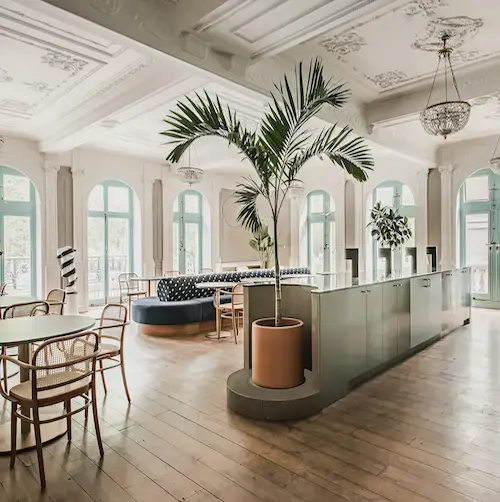
Office refurbishment updates existing spaces to enhance productivity and reflect company culture.
Planning is crucial to avoid wasted costs on unnecessary updates.
Timing and legal considerations significantly impact the refurbishment process.
An office refurbishment is one of the most powerful ways to refresh your workspace, boost productivity, and reflect your company culture. Done well, it can transform the way your team works day to day and make your office somewhere people genuinely want to be. But before you start ripping up carpets or ordering new furniture, it’s important to plan carefully.
This guide will take you through what office refurbishment actually means, what it costs, how to plan it properly, and the key considerations to make it a success.
What is an office refurbishment?
Office refurbishment is the process of updating, redesigning, or improving your existing office space. It can range from small changes, like new furniture and fresh paint, to more comprehensive updates, such as restructuring layouts, adding new meeting rooms, or improving lighting and ventilation.
Unlike an office relocation, refurbishment keeps you in your current premises. It’s about rethinking and optimising what you already have.
Office refurbishment vs. office fit-out
The terms are often used together, but they’re not the same.
An office refurbishment is about updating or reworking an existing space.
An office fit-out is the process of designing and building a brand-new workspace, often starting from a blank canvas.
If you’re staying in your current office, refurbishment is usually the relevant option. If you’re relocating, you’ll likely be considering a fit-out.
Why do an office refurbishment?
Every refurbishment should start with a clear reason. Without this, it’s easy to waste money on cosmetic updates that don’t actually support your team. Common drivers include:
Team growth or restructuring: Adapting layouts to accommodate more people or new departments.
Hybrid working: Creating flexible zones for collaboration, quiet work, and video calls.
Wellbeing: Improving lighting, acoustics, and comfort to reduce stress and fatigue.
Cost efficiency: Optimising space to avoid unnecessary rent or improve energy efficiency.
Employee engagement and retention: Creating an office people want to spend time in, which helps you keep hold of great talent.
Productivity and collaboration: Giving people spaces that genuinely support how they work together, from focused solo work to group projects.
Smarter use of space: Making sure every square foot works hard for you, which can also reduce overheads.
Brand alignment: Ensuring your workspace feels like a true reflection of your values, identity, and culture.
Client and talent attraction: Building an environment that makes a strong impression on visitors and appeals to potential recruits.
Start by analysing how your current office is being used. Where do bottlenecks happen? Which areas are underused? Understanding this will make your refurbishment meaningful and cost-effective.
How long does an office refurbishment take?
One of the first questions most businesses ask is how long an office refurbishment will actually take. The answer depends on the scale of your plans, the condition of your current space, and how much structural work is involved. A light refresh can be turned around relatively quickly, while a full-scale transformation requires much more time and coordination.
Small refurbishments (basic updates): 2–4 weeks. These are usually cosmetic changes such as painting, flooring, and replacing furniture.
Medium refurbishments (layout changes, furniture, lighting): 6–12 weeks. This often involves rethinking the flow of the office, upgrading fixtures and finishes, and bringing in new workstations.
Large refurbishments (major structural or design changes): 3–6 months. These projects can include moving walls, installing new HVAC systems, or delivering a complete redesign.
It’s important to remember that these are averages, not guarantees. Every project has its own unique challenges, and suppliers, contractors, and even building permissions can affect timings. Always allow for contingency time — at least a couple of extra weeks — so that unexpected delays don’t derail your plans.
You’ll also want to think about how the timeline works alongside your business operations. For some companies, it makes sense to schedule works during quieter months like August or December. Others choose a phased approach, tackling one part of the office at a time so that business can continue with minimal disruption. Being realistic about timings, and building flexibility into your plan, will make the entire refurbishment process much smoother.
When is the best time to refurbish an office?
Timing makes a big difference. Refurbishments are disruptive, so the quieter the period, the better. Many companies find August (when lots of employees are on holiday) or December (when activity naturally slows) are the most practical times.
Legal and practical considerations
Before you dive into design mood boards, it’s essential to check what you’re actually allowed to do in your office. Every building and lease agreement comes with its own rules, and skipping this step can cause costly delays later on.
Serviced offices: If you’re based in a serviced office, you’ll need to get written permission from the operator before making any changes, even small ones. Many serviced office providers don’t allow structural changes, so it’s worth clarifying exactly what is and isn’t possible.
Managed or leased offices: If you lease your space, review your lease terms carefully. You may need to apply for a “licence to alter” from your landlord before starting work. It’s also important to understand how any changes will affect your dilapidations liability at the end of your lease. A refurbishment that adds value to the space now could lead to higher restoration costs later, so factor this into your decision-making.
Health and safety compliance: Any refurbishment work must comply with UK building regulations and health and safety standards. This includes everything from fire safety and ventilation to electrical works and accessibility. Bringing in an experienced project manager or contractor can make sure all compliance requirements are met from the outset.
Timing and access: Consider how and when work will take place. Some buildings have restrictions on working hours, noise, or deliveries. You’ll also want to plan for quieter business periods, like August or December, to minimise disruption to your team.
Insurance: Check whether your current insurance covers refurbishment work, and if not, what additional cover you’ll need. This applies both to your office contents and to liability if contractors are working on-site.
Permissions for listed or shared buildings: If your office is part of a listed building or a shared block, there may be extra layers of approval needed. For listed buildings, restrictions can be much tighter, especially when it comes to structural changes or external work.
Taking the time to clarify all these points early on will help you avoid expensive complications later — and ensure your refurbishment runs smoothly from start to finish.
How much does an office refurbishment cost?
Costs vary depending on scope, location, and quality. A good way to estimate is by cost per square foot.
Basic refurbishment (cosmetic updates like painting, flooring, basic furniture): £40–£70 per sq ft
Medium refurbishment (layout changes, new furniture, improved lighting and finishes): £70–£100 per sq ft
High-spec refurbishment (bespoke design, advanced technology, sustainability upgrades, premium furniture): £100–£200+ per sq ft
Other costs to consider:
Professional fees (designers, project managers, surveyors)
Permissions and licences
Temporary workspace for your team during works
New IT infrastructure and cabling
VAT and contingency budgets (always allow at least 10–15% extra for unexpected costs)
If you’d like tailored advice on costs for your specific square footage, our team of office space experts can provide support and connect you with trusted suppliers.
Designing your office refurbishment
The design stage is where you turn analysis into action. Consider these factors:
1. Involve your team
Employees are the people using the space daily. Involving them helps ensure the office works for everyone and creates a sense of ownership. You could run surveys, workshops, or even host a social event where the team decorates or contributes ideas.
2. Reflect your brand
Your office should feel like a physical extension of your business. Think about colours, materials, and finishes that align with your values. Display photos of your team and milestones to create pride and belonging.
3. Prioritise natural light
Access to daylight is consistently ranked as one of the most important factors for employee wellbeing. Plan desks along window lines, and place meeting rooms or storage areas in lower-light areas.
4. Plan for flexibility
Business needs change, so create a space that can evolve. Modular furniture and movable partitions allow you to adapt layouts quickly. Soundproof pods are an excellent alternative to permanent meeting rooms, offering flexibility without major building work.
5. Think about furniture
Furniture is one of the biggest costs in a refurbishment, so it’s worth thinking carefully about your options. Buying second-hand can be a sustainable and cost-effective choice, while renting is ideal if you want flexibility or aren’t ready to commit to a full investment. Another approach is to invest in modular pieces, which give you adaptability now and longevity as your business evolves.
Managing the disruption
Refurbishments are exciting but can cause disruption if not managed well. Minimise stress by:
Communicating early and clearly with your team about timelines.
Giving employees input on temporary working arrangements.
Staggering works in phases if you want to keep parts of the office open.
Working with an experienced project manager to keep everything on schedule.
You’ll also need to plan where your employees will work during the refurbishment. Options include:
Temporary offices: Short-term rentals to keep everyone in one place.
On-demand workspaces: With Tally On Demand, you can give employees credits to book flexible desks or meeting rooms near their homes or in central locations. This can be more cost-effective and supportive than a single temporary office.
Remote working: If your team is comfortable working from home, refurbishment can be an opportunity to trial more flexible arrangements.
Sustainability in office refurbishment
Sustainability is no longer optional. Businesses are expected to consider environmental impact when redesigning their workspaces, whether that’s through using recycled or sustainable materials, installing energy-efficient lighting and HVAC systems, choosing second-hand or refurbished furniture, or designing with longevity and adaptability in mind. Taking this approach not only reduces your footprint but also supports your ESG goals and shows employees that you’re committed to creating a responsible workplace.
Making your office refurbishment a success
Office refurbishment is about much more than aesthetics. It’s a strategic decision that affects how your team works, how your brand is perceived, and how cost-effective your operations are.
Whether you’re looking to modernise layouts, create a space that supports hybrid working, or bring your company culture to life, the key is thoughtful planning. Understand your goals, involve your team, and work with trusted partners to bring the project to life.
If you’re considering an office refurbishment, Tally Workspace can help. From analysing how your team uses space, to providing temporary on-demand workspaces during the process, to connecting you with reliable refurbishment partners — we’ll guide you through every stage.
Explore office space in London
Priority neighbourhoods with deep coverage across the city.
Jules Robertson is the Co-Founder of Tally Workspace, where she leads on commercial strategy, growth, and product development. With a background in strategy consulting and a drive to fix real-world inefficiencies, Jules co-founded Tally Workspace to make the office search process more transparent, modern, and user-friendly for today’s hybrid teams.
From first office to scale-up headquarters, we have been there.
Secured a 14,000 sq ft CAT A leased HQ at White City Place
Introduced to 3 specialist fit-out partners, including Thirdway
Full market review spanning White City, Hammersmith & Soho
"Much like Butternut Box's brand, the project intent has been to pair a deeply human playfulness with elevated, premium design. Together we've crafted a joyful space which can bring out the best in all users, whether they be two or four legged."
"Tally helped us find our new office at lightning speed. Jules, Laura, and the team are the best at what they do. We wanted a rooftop, natural light, a central location, and a good deal. They got us 10+ solid options within 48hrs and scheduled all the viewings. We found our new space within 2 weeks."
Full market review across serviced, managed and leased office options
Custom layout designed by a workspace specialist - at no extra cost
Secured a self-contained 1,850 sq ft space in Leicester Square
"Tally Workspace exhausted the market and found us just what we were looking for within weeks. They were a breath of fresh air, extremely knowledgeable and helpful, and even assisted with design and fit-out. Very proactive at every stage, like an extension of our own team."
Secured a 2,000 sq ft self-contained HQ in Shoreditch
Workspace designer sourced and managed as part of the service
Used Tally Workspace on-demand between offices
"Tally Workspace has been an incredible help for Sifted. From understanding the office/remote first landscape to finding the right office for all of our requirements."
Shortlisted options across Marylebone, Victoria, Waterloo & Holborn
Secured a 60-desk office with internal meeting rooms in TCR
"You made this whole project smooth and actually enjoyable. You're well connected, which opened up options we wouldn't have found ourselves. I'm confident we would have missed this fantastic opportunity without your help, and you secured us a much better price than we could have achieved directly."
"I'd say it is a no brainer! A win win to use Tally Workspace to find your next space. No additional cost but endless extra value."
Founder & Lightning
"Not only are they very knowledgeable about the market, but they're lovely people to deal with. We're so happy with our final choice and can't wait to move!"
Finance Unlocked
"The space they found was perfect for our team, with loads of amazing breakout space, beautiful meeting rooms and a real emphasis on wellbeing."
Florence
"They got us 10+ solid options within 48hrs and scheduled all the viewings. Highly recommend. We found our new space within 2 weeks."
Cryptio
How Tally Workspace works
Tell us what you need
Team size, budget, location, and deal breakers. We'll ask about the things most people forget too.
searching...
We handle the search
We search our proprietary database then call landlords directly about unlisted spaces. Often back to you within a day.
We handle the detail
Contracts are where most searches fall apart. We review everything and negotiate before you sign.
You move in confident
Best space, best terms, timeline that fits your growth. You know exactly what you're signing.
Tell us what you're looking for
Find an office today
Using our extensive mapping of startup and scaleup office space, find an office that fits your needs and your culture in just a few minutes.