We'll search the whole market, including spaces not publicly listed, and come back with a shortlist that actually fits.
The Tally Workspace difference
We'll search the whole market, including spaces not publicly listed, and come back with a shortlist that actually fits.
AI-updated, full market access
Live availability from our database, plus spaces that never make it onto public listings
Free to you
Operators pay us. You get expert help at no cost
Best deal guaranteed
We flush out hidden costs and negotiate you the best deal
Free expert help
A dedicated specialist handles your search from day one
All Articles/Smart Offices: The Future of Workplace Design
Trending
5 min read
Smart Offices: The Future of Workplace Design
From smart lighting to desk booking apps, smart offices are shaping the future of work. Learn how to get started and find the right space with Tally Workspace.
Smart offices enhance productivity by automating repetitive tasks, allowing teams to focus on important work.
They improve employee experience through better wellbeing and comfort features.
Smart systems optimize energy efficiency, reducing costs and supporting sustainability goals.
Workplaces are evolving fast, and technology is at the heart of that change. Businesses are moving away from traditional office setups and towards spaces that actively support productivity, wellbeing, and sustainability. Smart offices are leading this shift.
For business owners and operational professionals, understanding what makes an office “smart” is no longer a nice-to-have — it’s essential for making informed decisions about workspace design and investment. Whether you’re managing a growing team, adapting to hybrid working, or simply looking for ways to cut costs and energy use, smart offices provide practical, people-focused solutions.
What is a smart office?
A smart office is a workplace that uses technology to make day-to-day operations smoother, more efficient, and more enjoyable for the people working there. Think of it as a fully connected workspace where lighting, heating, meeting room booking systems, security, and even coffee machines can be automated or controlled remotely.
At its core, a smart office is about combining building infrastructure with digital tools. Smart lighting for offices, for example, can automatically adjust brightness depending on the time of day. Sensors can track energy usage and optimise heating or cooling systems. Meeting rooms can be booked with a tap, while entry systems use facial recognition or mobile passes instead of key cards.
While the idea often sounds futuristic, smart offices are already here — and companies of every size are starting to invest in solutions that enhance productivity and support hybrid work models.
What are the key benefits of a smart office?
Smart offices aren’t just about upgrading technology — they deliver real advantages for both businesses and employees. From efficiency gains to better workplace experiences, the benefits are wide-reaching.
1. Boosted productivity
Smart offices free up time by automating repetitive tasks. Instead of manually adjusting thermostats or hunting for a free meeting room, teams can rely on connected systems that make those decisions automatically. This helps people focus on the work that matters.
2. Better employee experience
Workplace technology doesn’t just support productivity — it also improves wellbeing and employee happiness. Smart lighting for offices, for instance, can mimic natural daylight, reducing eye strain and boosting mood. Air quality sensors help keep the workplace comfortable and healthy. Many businesses see this as part of their strategy to attract and retain talent.
3. Improved energy efficiency
Smart systems constantly monitor energy use. They switch off lights in empty rooms, optimise heating schedules, and reduce unnecessary power consumption. This not only cuts costs but also supports sustainability goals.
4. Stronger workplace flexibility
For businesses adopting hybrid work models, smart offices make it easier to manage flexible schedules. Desk-booking apps, occupancy sensors, and integrated calendar systems mean teams can come in when they need to, without worrying about space availability.
5. Enhanced data and insights
Smart offices of the future won’t just run more efficiently — they’ll also provide valuable insights. Sensors and workplace apps collect data on how spaces are used, helping leaders make informed decisions about layout, investment, and employee needs.
What does a smart office look like?
The reality of a smart office will vary depending on company size and budget, but most include some combination of these features:
Smart lighting for offices: Automated lighting that adapts to natural daylight, occupancy, or employee preferences.
WiFi-enabled devices: From connected printers to smart kettles, devices link into one system for seamless control.
Access and security: Mobile-enabled door locks, facial recognition, or biometric access.
Environmental controls: Heating, ventilation, and air conditioning systems (HVAC) that adapt to real-time needs.
Desk and room booking systems: Simple tools that prevent wasted time searching for space, even for breakout spaces.
Wellness technology: Air quality sensors, ergonomic furniture with connected settings, and even apps that monitor noise levels.
For many business owners looking for a smart office solution, the first step is usually to add one or two solutions (like smart lighting and meeting room booking) before expanding further.
How to get started with a smart office
Transitioning into a smart office doesn’t mean replacing everything overnight. Many businesses begin with a pilot project:
Introduce smart lighting for offices to reduce energy costs.
Add occupancy sensors to track space usage.
Test a desk-booking system for hybrid teams.
From there, it’s easier to identify which tools add the most value. Working with a managed office provider is another way to benefit quickly. Many flexible workspaces already include smart systems, giving you access without the upfront investment.
Are smart offices expensive?
The cost of a smart office depends on the level of integration. Large-scale systems that connect lighting, heating, security, and booking platforms can require a significant upfront investment, which is why global enterprises like Amazon smart offices often lead the way. But smaller businesses don’t need to go all-in. Affordable tools such as smart lighting for offices or desk-booking apps can be introduced gradually, delivering quick wins without stretching budgets.
What matters most is the long-term value. Smart systems reduce energy costs, improve space usage, and cut waste, which means the return on investment often comes sooner than expected. Many serviced office providers already include these features in their packages, giving teams access to the benefits without the setup costs.
Do you need to be a big business to have a smart office?
Smart office technology can be tailored to fit any size of organisation. Startups and small teams often begin with simple upgrades — like motion-sensor lighting, app-based meeting room bookings, or WiFi–enabled thermostats — because they’re cost-effective and easy to install. These tools can make a noticeable difference to daily operations without requiring major infrastructure changes.
Larger companies, on the other hand, may invest in fully integrated systems that link every element of the workplace, from security to environmental controls. But that doesn’t mean smaller businesses are left behind. Many coworking and serviced office providers now offer smart-enabled spaces as standard, so even a three-person team can benefit from the same advanced features as a corporate headquarters.
How can I find smart offices near me?
Finding a smart office doesn’t need to involve hours of research or endless site visits. The fastest way is to work with providers who already specialise in technology-led spaces. Many flexible and serviced offices now come equipped with features such as automated lighting, smart booking systems, and integrated security, so you can move straight into a space that’s ready to go.
Tally Workspace makes this search simple. Instead of scrolling through dozens of listings, you can use Tally to compare options, filter by location, and find offices that are already set up with the smart features your team needs. Whether you’re looking for a small, tech-enabled hub or a larger space designed for hybrid working, Tally can connect you with the right providers and negotiate the best deal on your behalf.
Why smart offices matter now
The way businesses use office space has shifted. Hybrid and flexible working mean teams interact with the workplace differently, and there’s greater pressure to prioritise sustainability, efficiency, and employee wellbeing. Smart offices are designed to meet those needs directly. They bring together technology and people-focused design to create spaces that genuinely support how teams work today.
Investing in smart solutions now helps businesses cut unnecessary costs, improve energy use, and give employees an environment that makes their working day smoother and more enjoyable. From smart lighting for offices to advanced workplace apps, these tools aren’t gimmicks — they’re becoming the standard for competitive, future-ready organisations.
Tally Workspace can help you find an office that’s as smart as your business needs it to be. Whether you want a space with a few clever upgrades or a fully integrated setup, we’ll connect you with options that suit your budget, your goals, and your team.
Explore office space in London
Priority neighbourhoods with deep coverage across the city.
From first office to scale-up headquarters, we have been there.
Secured a 14,000 sq ft CAT A leased HQ at White City Place
Introduced to 3 specialist fit-out partners, including Thirdway
Full market review spanning White City, Hammersmith & Soho
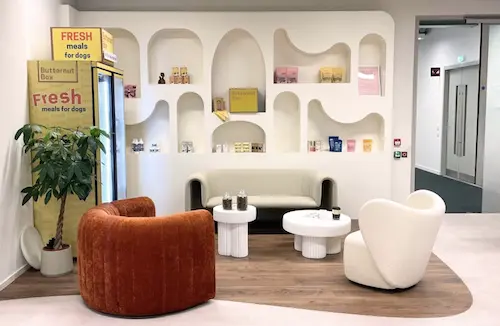
"Much like Butternut Box's brand, the project intent has been to pair a deeply human playfulness with elevated, premium design. Together we've crafted a joyful space which can bring out the best in all users, whether they be two or four legged."
"Tally helped us find our new office at lightning speed. Jules, Laura, and the team are the best at what they do. We wanted a rooftop, natural light, a central location, and a good deal. They got us 10+ solid options within 48hrs and scheduled all the viewings. We found our new space within 2 weeks."
Full market review across serviced, managed and leased office options
Custom layout designed by a workspace specialist - at no extra cost
Secured a self-contained 1,850 sq ft space in Leicester Square
"Tally Workspace exhausted the market and found us just what we were looking for within weeks. They were a breath of fresh air, extremely knowledgeable and helpful, and even assisted with design and fit-out. Very proactive at every stage, like an extension of our own team."
Secured a 2,000 sq ft self-contained HQ in Shoreditch
Workspace designer sourced and managed as part of the service
Used Tally Workspace on-demand between offices
"Tally Workspace has been an incredible help for Sifted. From understanding the office/remote first landscape to finding the right office for all of our requirements."
Shortlisted options across Marylebone, Victoria, Waterloo & Holborn
Secured a 60-desk office with internal meeting rooms in TCR
"You made this whole project smooth and actually enjoyable. You're well connected, which opened up options we wouldn't have found ourselves. I'm confident we would have missed this fantastic opportunity without your help, and you secured us a much better price than we could have achieved directly."
"I'd say it is a no brainer! A win win to use Tally Workspace to find your next space. No additional cost but endless extra value."
Founder & Lightning
"Not only are they very knowledgeable about the market, but they're lovely people to deal with. We're so happy with our final choice and can't wait to move!"
Finance Unlocked
"The space they found was perfect for our team, with loads of amazing breakout space, beautiful meeting rooms and a real emphasis on wellbeing."
Florence
"They got us 10+ solid options within 48hrs and scheduled all the viewings. Highly recommend. We found our new space within 2 weeks."
Cryptio
How Tally Workspace works
Tell us what you need
Team size, budget, location, and deal breakers. We'll ask about the things most people forget too.
searching...
We handle the search
We search our proprietary database then call landlords directly about unlisted spaces. Often back to you within a day.
We handle the detail
Contracts are where most searches fall apart. We review everything and negotiate before you sign.
You move in confident
Best space, best terms, timeline that fits your growth. You know exactly what you're signing.
Tell us what you're looking for
Find an office today
Using our extensive mapping of startup and scaleup office space, find an office that fits your needs and your culture in just a few minutes.