We'll search the whole market, including spaces not publicly listed, and come back with a shortlist that actually fits.
The Tally Workspace difference
We'll search the whole market, including spaces not publicly listed, and come back with a shortlist that actually fits.
AI-updated, full market access
Live availability from our database, plus spaces that never make it onto public listings
Free to you
Operators pay us. You get expert help at no cost
Best deal guaranteed
We flush out hidden costs and negotiate you the best deal
Free expert help
A dedicated specialist handles your search from day one
All Articles/The 25 Most Sustainable Companies in the UK (Plus Our Top Eco Office Spaces)
Advice
8 min read
The 25 Most Sustainable Companies in the UK (Plus Our Top Eco Office Spaces)
Meet the UK’s most forward-thinking companies championing sustainability, and explore eco-friendly office options that help businesses make a real impact.
Sustainability is increasingly important for businesses, impacting consumer and investor choices.
High ESG standards create workplaces that respect both people and the planet.
East London is a hub for sustainable companies due to lower rents and vibrant communities.
Sustainability is a vital component of modern business, with consumers, employees, and investors placing greater importance on the environmental and social values of any organisation.
Leaders who want to reflect a commitment to sustainability benefit from considering more than financial returns alone — starting with where their team works, from office space in Fitzrovia to greener buildings across the capital.
High environmental, social, and governance (ESG) standards create workplaces that respect people and the planet.
Demand for sustainable companies continues to grow, especially in the UK, where businesses are choosing office space in Farringdon and other well-connected areas with strong sustainability ratings.
The emphasis on greener workplaces is stronger than ever.
What is considered a sustainable company?
A sustainable company prioritises positive impact on the environment and society.
It tracks its greenhouse gas emissions, invests in renewables, avoids exploitative supply chains, and adopts fair labour practices.
It continually assesses the broader social implications of its products or services.
Transparent impact measurement, responsible governance, and clear environmental targets are common traits of these businesses — many of which base themselves in office space in Shoreditch and east London’s growing green corridor.
Many sustainable companies uk also consider external certifications, like B Corp accreditation.
B Corps meet high standards of verified performance, accountability, and transparency across five categories:
Governance
Workers
Community
Environment
Customers
These standards guide a focus on inclusivity, carbon reduction, efficient resource usage, waste management, ethical labour practices, and social responsibility.
A commitment to these principles sets the most sustainable companies apart from competitors.
It also influences practical factors such as the type of office space they occupy.
What are the most sustainable companies in the UK?
Every industry includes businesses making tremendous strides to protect the planet and serve their communities.
We’ve put together this list of the most sustainable companies in the UK (many are startups or scaleups) known for innovation, scalable impact, and a strong commitment to both environmental and social wellbeing:
1. Olio (food waste reduction) Connects neighbours and local businesses to share surplus food.Reduces waste and encourages community engagement.
2. Octopus Energy (green energy provider) Supplies 100% renewable electricity. Delivers accessible, affordable green energy.3. Notpla (biodegradable packaging) Uses seaweed-based materials to replace single-use plastic.Packaging naturally decomposes, leaving no harmful residue.4. Too Good To Go (food waste reduction) Lets users buy surplus meals from restaurants and bakeries.Saves edible food and reduces unnecessary landfill usage.5. Moixa (energy storage solutions) Creates smart battery technology.Optimises energy storage for homes and businesses using renewables.6. Xampla (alternative materials) Develops plant-based plastic replacements.Products fully decompose without polluting ecosystems.7. Powervault (home energy storage) Helps households store renewable energy.Cuts energy waste and carbon footprints.8. Emitwise (carbon accounting software) Uses AI-powered platforms to measure and manage carbon emissions.Streamlines corporate efforts to track and reduce environmental impact.9. LettUs Grow (sustainable agriculture) Designs aeroponic farming systems.Cuts water usage and increases yields for urban farming.10. Bio-Bean (coffee waste recycling) Transforms used coffee grounds into biofuels and biochemicals.Diverts waste from landfill while creating green energy.11. Adaptavate (eco-friendly building materials) Creates carbon-negative construction products.Minimises emissions in the built environment.12. Treecard (sustainable FinTech) Offers a wooden debit card directing profits to global reforestation.Plants trees for every £45 spent.13. Tred (green banking)Provides a debit card that tracks users’ carbon footprints.Offsets emissions with verified reforestation projects.14. Neutreeno (carbon offsetting for e-commerce)Calculates and offsets emissions for online retailers.Promotes transparent and robust offsetting methods.15. CLUBZERØ (reusable packaging system)Creates returnable packaging for food and drinks.Targets single-use waste by introducing convenient reuse models.16. Seep (eco-friendly cleaning products)Develops biodegradable cleaning supplies.Reduces plastic dependency through compostable materials.17. Giki (sustainability tracking)Offers footprint analysis for individuals and businesses.Encourages better decision-making on consumption and emissions.18. Mindful Chef (sustainable meal kits)Carbon-neutral meal kit delivery service.Emphasises ethically sourced ingredients and minimal waste.19. Ecosia (eco-friendly search engine)Invests ad revenue in tree planting worldwide.Funds global reforestation to combat climate change.20. The Cheeky Panda (sustainable hygiene products)Uses bamboo to create tissues and wipes.Avoids deforestation by focusing on fast-growing bamboo.21. Clearabee (on-demand waste management)Manages rubbish collection with a strong recycling ethos.Diverts significant amounts of waste away from landfill.22. UrbanChain (renewable energy trading)Leverages AI and blockchain to match green energy producers with consumers directly.Increases efficiency in energy markets.23. Yayzy (carbon footprint tracking)Personal finance tool that calculates users’ carbon footprints.Offers practical offsetting solutions.24. BeZero Carbon (carbon ratings and offsetting)Uses AI to evaluate carbon offset projects.Delivers quality assurance in carbon markets.25. Carbon Clean (carbon capture technology)Creates capture systems for heavy industries.Significantly reduces CO₂ emissions in challenging industrial processes.
The importance of office spaces for sustainable companies
Even with robust supply chain management and responsible operations, the office environment plays a crucial role in sustainability.
Certain features significantly reduce environmental impact while promoting employee well-being and collaboration:
Energy-efficient lighting
Maximal use of natural light
Eco-friendly furniture
Responsible waste management
Partnerships with socially responsible brands (e.g., B Corp-accredited beverage providers)
Biophilic design (bringing nature indoors)
Onsite facilities that encourage cycling or use of public transport
Community events that promote health, wellbeing, and social connections
When a company aligns these features with strong environmental, social, and governance principles, it stands out as truly sustainable.
Where in London are the most sustainable companies?
Tally Workspace analysed 257 B-Corp-accredited companies to discover patterns in their chosen locations.
East London holds the highest share, with 36.58% (94 B Corps).
West London accounts for 30.74% (79), while North London has 10.94% (28).
There are a few reasons why:
Lower rents in East London: In our latest Cost of Office Report (May 2024), East London ranks as the most budget-friendly area. For environmentally conscious businesses, cost savings can be redirected towards green innovations, carbon-offsetting initiatives, or employee wellness programs.
Like-minded communities: East London’s startup scene is vibrant and entrepreneurial, creating clusters of sustainable companies. Leaders gravitate there to meet clients and collaborators with a shared commitment to sustainability.
Proximity to sustainable office providers: Many well-known flexible workspace operators in East London incorporate advanced sustainability initiatives. They use renewable energy, promote low-carbon commuting, and foster inclusive professional environments.
Postcodes like EC2A (Shoreditch and parts of the City) have emerged as hotspots.
E1 and EC1V are also favoured, linking Spitalfields, Whitechapel, and creative communities around Old Street.
These neighbourhoods embody a dynamic blend of historic industrial character and modern, conscientious redevelopment.
Spotlight on sustainable office providers in London
Work.Life was founded on a clear principle: when teams feel good, businesses thrive.
Their coworking and managed offices across London, Reading, and Manchester all centre on thoughtful design and top-tier personal service.
The Old Street location showcases this philosophy through multiple initiatives:
Holistic office design: Work.Life puts health and wellbeing first, with flexible layouts that let members find their ideal setup. Natural light, ergonomic seating, and inviting communal areas create a positive backdrop for meaningful work.
Focus on energy efficiency: From smart lighting solutions to practical waste management, Work.Life reduces environmental impact wherever possible. This helps businesses that prioritise sustainability stay aligned with their own green goals.
Community events: With regular socials, seminars, and networking sessions, it’s easy to get to know your neighbours. Work.Life believes genuine connections make for happier teams, so collaboration is woven into the day-to-day experience.
Operating in multiple locations, X+Why champions net-zero carbon initiatives and builds strong local networks.
Their Peoples Mission Hall in E1 exemplifies this ambition, delivering a workspace that supports members’ eco-friendly and social goals.
We spoke with them to understand how they boost sustainability and why forward-thinking companies thrive there.
Net-zero carbon focus: Every X+Why site pushes towards net-zero carbon, whether through renewable energy choices or ongoing efficiency upgrades.
Encouraging greener transport: Ample bike storage, shower facilities, and incentives for low-impact commuting are standard features, helping members cut down on emissions.
Community-centered events: From workshops on low-waste living to sessions spotlighting local social initiatives, X+Why supports a culture of shared learning.
Responsible materials and design: Where possible, they use recycled or reclaimed materials in their interiors, reducing the environmental footprint of their building projects.
Missionworks sets out to blend mindful design with a deep respect for the planet.
Based inside a restored Grade II listed church, their approach keeps sustainability front and centre while creating a peaceful workspace that supports the wellbeing of its members.
We caught up with the team to hear more about how they put eco-friendly thinking into action and why value-driven businesses find it so easy to call Missionworks home.
Caring renovations: Since day one, Missionworks has relied on natural, recyclable materials to update its historic church building, ensuring that these renovations fit a circular economy model.
Encouraging zero-waste: A robust zero-waste policy sees rubbish either recycled or converted into renewable energy. With dedicated donation stations on site, reusing items is second nature in this community.
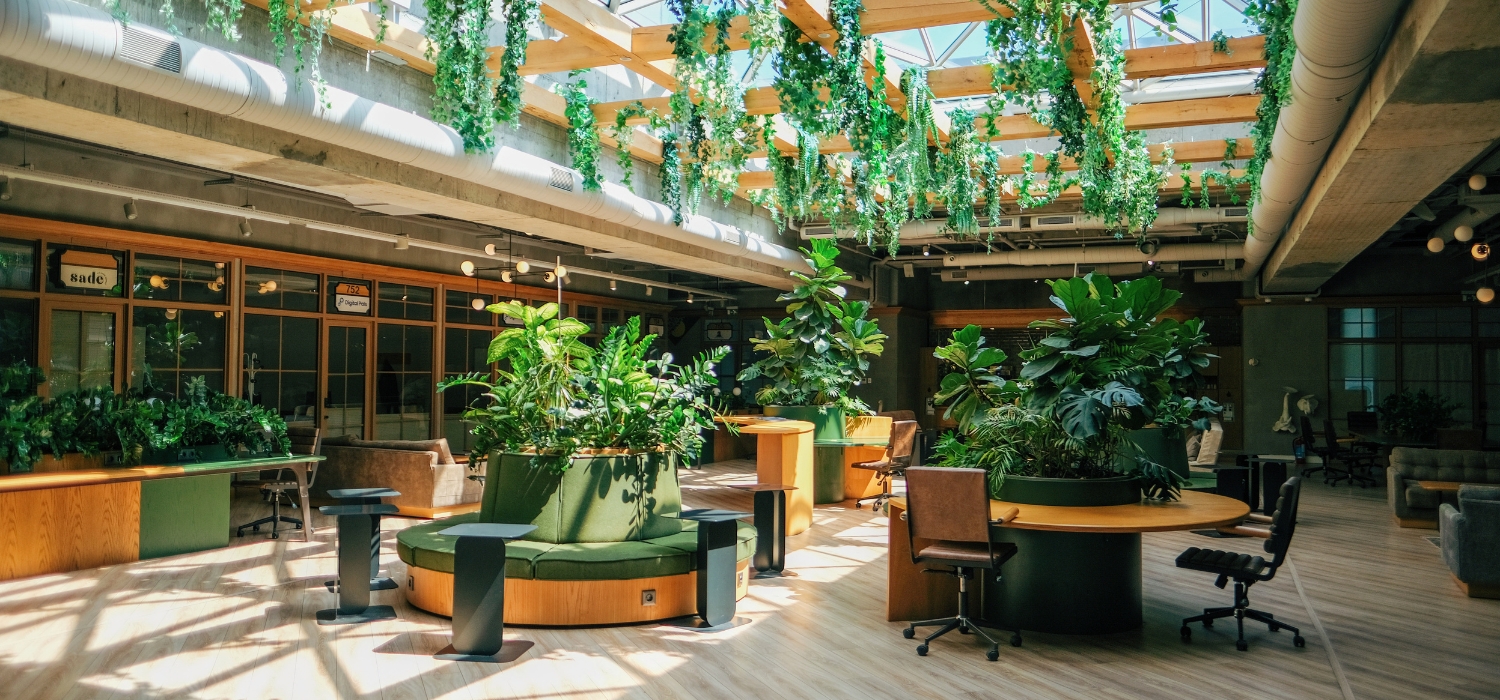
Green design elements: Biophilic touches are everywhere, from abundant air-purifying plants to carefully chosen décor that reduces environmental impact. These features help maintain a tranquil, healthy workspace.
Inspiring well-being initiatives: Alongside flexible working, members can jump into yoga, meditation sessions, or other wellness activities. A strong volunteering culture also supports local charities, and Missionworks recognises these efforts through membership perks.
Paddington Works set out to merge innovative workplace design with a real dedication to wellness and sustainability.
Tucked away in the Paddington Basin — just a few minutes from the station — this space offers private studios, coworking areas, meeting rooms, and even a fully equipped auditorium and podcast studio
Powering up responsibly: Every corner runs on 100% certified renewable energy, sourced through their partnership with Good Energy.
Fresh air, fresh thinking: An advanced air circulation system refreshes spaces every 18 minutes, delivering well over the standard requirement for clean air.
Local and low-impact events: For catering, they team up with small businesses to reduce food miles and support nearby communities. Even the cocktails served on “Thirsty Thursdays” are sustainably canned by in-house members, MOTH.
Zero-mile crops: One of the most unique features is their vertical farm — seeds are grown on-site, and members can take home herbs and veggies or plant them themselves, championing a mini circular economy.
Most leaders want to check an office provider’s green credentials and see who they’ll be rubbing shoulders with.
A workspace packed with sustainable features can quickly become a hotspot for UK-based eco friendly companies looking to share ideas and collaborate, like:
Office provider accreditations: B Corp office providers must meet rigorous standards and often invest in improvements such as solar panels and advanced recycling facilities.
Mix of other tenants: Buildings hosting a diverse community of other UK-based sustainable companies attract others with similar ideals. Collaboration and networking become simpler when everyone is motivated by compatible goals.
Biophilic and wellness-oriented design: Plentiful greenery, efficient air filtration, natural light, and spaces for relaxation or informal chats encourage health and positivity.
Always innovating: A good workspace provider invests in smart technologies that regulate temperature and lighting, cutting costs and emissions. Sensors, automation, and real-time data tracking deliver actionable insights for constant improvement.
How to make an existing office space more sustainable
Some organisations sign leases in older buildings or pick a private unit that needs a bit more love.
The good news? Making it greener is totally doable with a few clear steps:
Switch to LED or energy-efficient lighting
Maximise the use of natural lighting through appropriate blinds or reflective surfaces
Furnish with upcycled or responsibly sourced furniture
Introduce indoor plants to improve air quality and wellbeing
Install smart plugs and sensors to reduce energy waste
Manage waste effectively with separate bins for paper, plastic, compostable materials, and general waste
Encourage green commuting by providing bike storage or partial reimbursement for public transport
How Tally Workspace can help sustainable businesses in the UK
If you're looking for a workspace that walks the talk when it comes to sustainability, we’ve got your back.
Whether you need a spot that’s B Corp certified or simply a place with smart green features, Tally Workspace does the heavy lifting for you.
We know London’s office scene inside out — right down to the operators committed to renewable energy, recycling programs, and everything in between.
We’ll connect you with spaces that match your values and vibe.
No endless online searches or sifting through glossy brochures on your own.
Just straightforward advice from people who care as much about the planet as you do.
Ready to find the perfect office for your team?
Drop us a line and let’s make your next move a more sustainable one.
Explore office space in London
Priority neighbourhoods with deep coverage across the city.
Laura Beales is the Co-Founder of Tally Workspace, bringing a unique blend of financial expertise and real estate knowledge to the office space industry. A qualified Chartered Accountant, Laura began her career in finance but transitioned into commercial property after experiencing first-hand the inefficiencies and lack of transparency in the market from a customer perspective.
From first office to scale-up headquarters, we have been there.
Secured a 14,000 sq ft CAT A leased HQ at White City Place
Introduced to 3 specialist fit-out partners, including Thirdway
Full market review spanning White City, Hammersmith & Soho
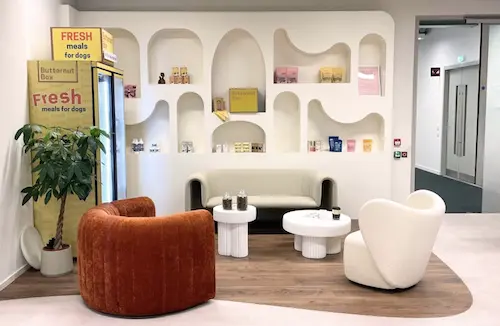
"Much like Butternut Box's brand, the project intent has been to pair a deeply human playfulness with elevated, premium design. Together we've crafted a joyful space which can bring out the best in all users, whether they be two or four legged."
"Tally helped us find our new office at lightning speed. Jules, Laura, and the team are the best at what they do. We wanted a rooftop, natural light, a central location, and a good deal. They got us 10+ solid options within 48hrs and scheduled all the viewings. We found our new space within 2 weeks."
Full market review across serviced, managed and leased office options
Custom layout designed by a workspace specialist - at no extra cost
Secured a self-contained 1,850 sq ft space in Leicester Square
"Tally Workspace exhausted the market and found us just what we were looking for within weeks. They were a breath of fresh air, extremely knowledgeable and helpful, and even assisted with design and fit-out. Very proactive at every stage, like an extension of our own team."
Secured a 2,000 sq ft self-contained HQ in Shoreditch
Workspace designer sourced and managed as part of the service
Used Tally Workspace on-demand between offices
"Tally Workspace has been an incredible help for Sifted. From understanding the office/remote first landscape to finding the right office for all of our requirements."
Shortlisted options across Marylebone, Victoria, Waterloo & Holborn
Secured a 60-desk office with internal meeting rooms in TCR
"You made this whole project smooth and actually enjoyable. You're well connected, which opened up options we wouldn't have found ourselves. I'm confident we would have missed this fantastic opportunity without your help, and you secured us a much better price than we could have achieved directly."
"I'd say it is a no brainer! A win win to use Tally Workspace to find your next space. No additional cost but endless extra value."
Founder & Lightning
"Not only are they very knowledgeable about the market, but they're lovely people to deal with. We're so happy with our final choice and can't wait to move!"
Finance Unlocked
"The space they found was perfect for our team, with loads of amazing breakout space, beautiful meeting rooms and a real emphasis on wellbeing."
Florence
"They got us 10+ solid options within 48hrs and scheduled all the viewings. Highly recommend. We found our new space within 2 weeks."
Cryptio
How Tally Workspace works
Tell us what you need
Team size, budget, location, and deal breakers. We'll ask about the things most people forget too.
searching...
We handle the search
We search our proprietary database then call landlords directly about unlisted spaces. Often back to you within a day.
We handle the detail
Contracts are where most searches fall apart. We review everything and negotiate before you sign.
You move in confident
Best space, best terms, timeline that fits your growth. You know exactly what you're signing.
Tell us what you're looking for
Find an office today
Using our extensive mapping of startup and scaleup office space, find an office that fits your needs and your culture in just a few minutes.





.jpg)
.jpg)
.jpg)