

The Green Commute Initiative (GCI) is one of the simplest ways to boost your sustainability credentials and support your team’s wellbeing. It’s a cycle-to-work scheme designed for modern workplaces — no £1,000 cap, no exit fees, and plenty of flexibility (hello, e-bikes!). If you’re looking for an employee benefit that actually makes a difference, this one ticks a lot of boxes. It helps reduce your company’s carbon footprint, promotes healthier daily habits, and shows your team that you’re serious about doing good — for people and the planet. In this guide, we’ll walk you through how the Green Commute Initiative works, how to roll it out across your business, and why more employers are getting on board.
What is the Green Initiative program?
The Green Commute Initiative (GCI) is a government-backed cycle-to-work scheme that makes it easier for employees to choose low-impact, active travel — whether that’s cycling in every day or mixing it up with public transport. For employers, it’s a smart, low-effort way to support sustainability goals while giving your team a benefit they’ll actually use.
GCI works through salary sacrifice, which means your employees can save on the cost of a new bike or e-bike through tax-efficient monthly payments. But unlike some other schemes, there’s no faff at the end of the agreement — no fees, no unexpected costs. Just a clear path to greener commuting.
Rolling it out is simple, and you’ll have access to resources to help you promote the scheme internally — from posters to onboarding guides. And because GCI is FCA-approved, you don’t need to be regulated to take part.
In short: it’s an easy win. You get to reduce Scope 3 emissions, boost employee wellbeing, and show that you’re serious about your environmental impact — all without overhauling your operations.
What is green commuting?
Green commuting is all about swapping out high-emission travel for cleaner, more sustainable options. That could mean cycling, walking, taking the bus, hopping on a train, or even car-sharing with colleagues. It’s not just better for the planet — it’s often better for people too.
For employers, encouraging green commuting is a simple but meaningful way to cut down on your organisation’s environmental impact. And it doesn’t have to involve a major infrastructure overhaul. Small nudges — like supporting cycle-to-work schemes, providing safe bike storage, or sharing local public transport routes — can make a big difference.
There’s also a real wellbeing benefit. Greener commutes tend to mean more movement, less stress, and fewer fumes. And when your team arrives feeling energised rather than frazzled, that’s a win for everyone.
Whether you’re building out your ESG strategy or just want to offer more thoughtful perks, supporting green commuting is a smart place to start.
What is the green commute initiative ‘Cycle to Work’?
The Green Commute Initiative’s Cycle to Work scheme is a tax-efficient way for your team to get set up with a brand-new bike, e-bike, or cycling accessories — without the upfront cost. As an employer, you simply set up a salary sacrifice agreement, and your team pays for their bike in manageable monthly instalments taken from their gross salary.
It’s a win-win. Your employees get big savings, and you show that you’re actively supporting sustainability, health, and smarter commuting choices.
Why it’s worth starting as part of your company culture:
- Cost savings for staff: Employees can save up to 40% on the cost of bikes and accessories thanks to income tax and National Insurance reductions — making greener travel more accessible to everyone, not just seasoned cyclists.
- Healthier, happier teams: Cycling boosts cardiovascular health, supports mental wellbeing, and gets people moving before and after work. Teams that cycle often report increased focus and reduced stress levels — great for productivity and morale.
- Lower carbon footprint: Every bike journey is one less car on the road. Supporting cycling directly reduces your business’s Scope 3 emissions and contributes to cleaner air in your community.
- Supports your ESG goals: Whether you’re working towards B Corp status or simply aiming to operate more responsibly, Cycle to Work schemes show clear alignment with your environmental and social values.
- Helps attract and retain talent: Today’s employees care about purpose, flexibility, and values. Offering meaningful, lifestyle-focused benefits like GCI shows you’re paying attention — and makes your business stand out in a competitive hiring market.
- Flexible for different commutes: Not everyone lives around the corner. With the Green Commute Initiative, e-bikes are included too, making it easier for people with longer journeys — or hilly routes — to join in.
- Minimal admin, maximum impact: It’s quick to set up, with plenty of support and ready-to-go comms packs to help you spread the word internally. No need for lengthy policy updates or complex payroll changes.
By offering the Cycle to Work scheme through the Green Commute Initiative, you're creating a workplace that’s forward-thinking, people-focused, and genuinely invested in doing good.
What’s the limit on the Green Commute Initiative?
The limit on the Green Commute Initiative typically depends on the employer's policies and the total cost of the bike scheme. Generally, employers can set a limit, but it often falls around £1,000 for the Cycle to Work scheme. With this budget, you can choose a high-quality bike that suits your commuting needs.
The best Green Commute Initiative bike shops
Once your team is signed up for the Green Commute Initiative, the next step is choosing the right place to get their bike. Luckily, the scheme works with a huge range of retailers across the UK — from big high-street names to brilliant local independents. Whether someone’s after a sleek city bike, an electric hybrid, or just a really good helmet, there’s plenty of choice.
As an employer, you don’t need to lock people into one specific shop. GCI gives employees the freedom to browse and buy from retailers that work best for them — which means happier cyclists and fewer admin headaches for you.
What to look for in a GCI-approved bike shop
Not all bike shops are created equal — so it’s worth knowing what to prioritise. Whether your team’s full of cycling pros or total beginners, these tips will help them choose a shop that fits their commute and their comfort level.
- Great aftercare: Some shops include servicing or safety checks in the purchase, which is ideal for first-time riders or e-bike owners who’ll need battery care.
- Test ride options: Trying before buying can make a big difference — especially for those commuting longer distances or navigating hills.
- Expert advice: A good shop will help your team find the right bike for their route, size, and riding confidence — plus any accessories like panniers, locks or lights.
- Delivery and Click & Collect: For remote or hybrid teams, shops that offer nationwide delivery or click & collect are super helpful.
Popular GCI retailers in the UK
From big-name chains to brilliant independents, there’s no shortage of GCI-approved shops to choose from:
- Evans Cycles: A reliable choice with a wide selection of bikes, accessories and service plans. Great for both beginners and experienced cyclists.
- Halfords: Offers GCI on many models (including e-bikes), plus regular sales, bundle deals, and the option for in-store servicing.
- Cycle Republic (now part of Halfords): A strong option for mid-range bikes and commuter gear, especially in larger cities.
- Pure Electric: Specialising in electric bikes and scooters, with stores in major cities like London, Bristol, and Manchester. Great for longer commutes or hilly routes.
- Ribble Cycles: A more premium UK-based brand with an online store and flagship showroom in Lancashire—popular with serious cyclists.
- Local independent shops: From Condor Cycles (Camden), Velorution (Chelsea, Hackney, Islington, and Marylebone), CycleFit (Bloomsbury), and Bike Shack (Leytonstone) — your local stores are full of helpful advice, personalised service, and a real passion for cycling. Supporting them also strengthens your community ties — something your employees will notice and appreciate.
Want to find other GCI-approved bike shops near you? Search on the official Green Commute Initiative website.
Top tip for employers: Put together a shortlist of nearby GCI-approved retailers and pop it in your internal comms. Bonus points for including distance from the office, whether they offer e-bike options, and if they’ve got good servicing packages.
How to use the Green Commute Initiative calculator
Curious how much your employees could save through the scheme? The Green Commute Initiative has a handy calculator that does the maths for you.
It takes into account things like salary, bike cost (including accessories like helmets), payment frequency, and tax relief — so you’ll get a personalised breakdown in seconds. You can also see the small monthly reduction in take-home pay and the total savings as a percentage.
It’s a brilliant tool to share with your team or include in your internal comms to help them understand just how cost-effective the scheme can be.
Cyclescheme vs Green Commute Initiative: Which is right for your employees?
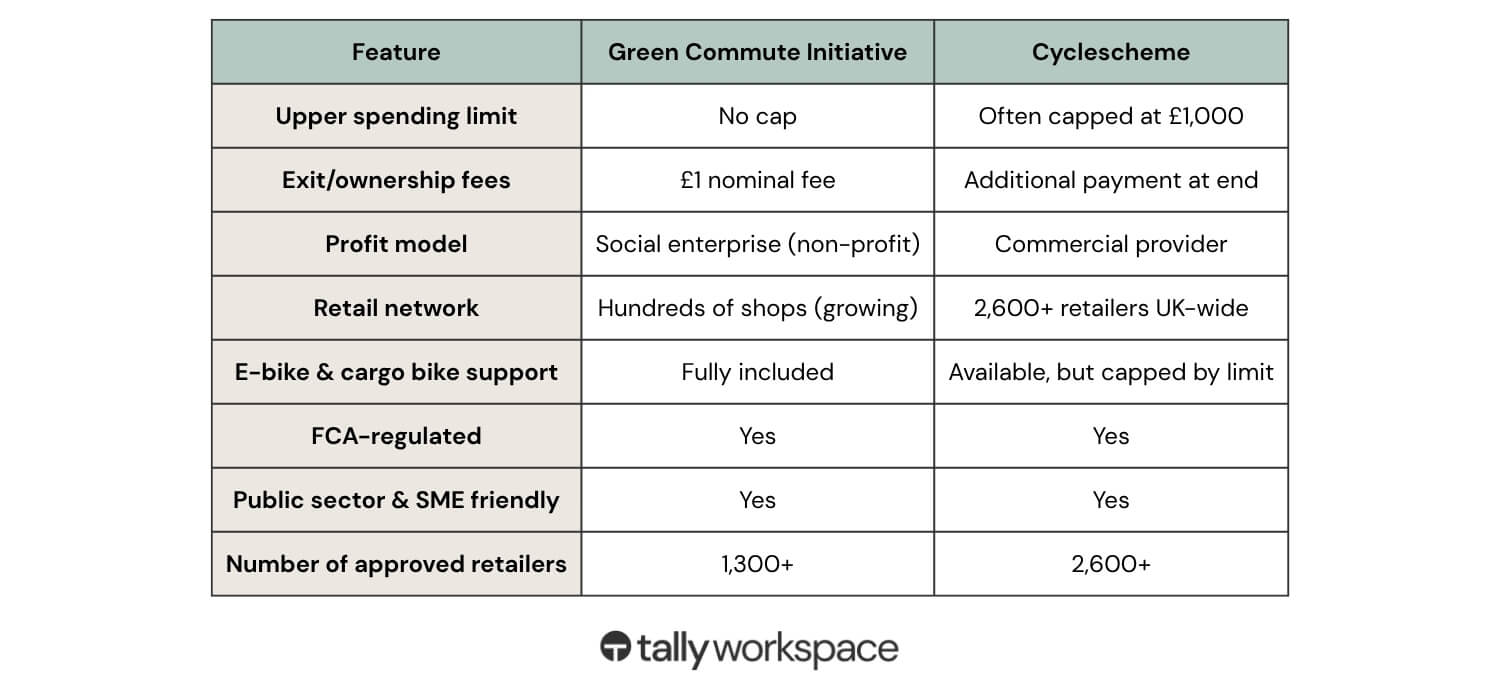
Both Cyclescheme and the Green Commute Initiative (GCI) are government-backed Cycle to Work schemes that let employees save on bikes and accessories through salary sacrifice. But while they achieve similar goals, there are a few key differences that might make one better suited to your business than the other.
Green Commute Initiative (GCI)
- No £1,000 cap: GCI removes the typical £1,000 limit — making it ideal for employees interested in e-bikes, cargo bikes, or specialist cycles.
- No exit fees or end-of-hire charges: Unlike other schemes, GCI has a transparent, FCA-compliant ownership model. Employees aren’t hit with unexpected fees at the end of their agreement — just a nominal £1 transfer charge.
- Social enterprise model: GCI is a not-for-profit social enterprise. Any profits are reinvested into getting more people cycling and supporting environmental goals.
- Inclusive and ethical: GCI supports public sector bodies, charities, and smaller employers just as easily as large corporates — and it’s accessible to employees who might otherwise be excluded from traditional schemes.
- Strong sustainability credentials: With a clear focus on environmental impact, GCI aligns well with ESG strategies and carbon reduction plans.
Cyclescheme
- Wider retail network: Cyclescheme is partnered with over 2,600 bike shops across the UK — including major chains, online retailers, and independent stores — offering employees a wide choice of brands and pricing.
- Established provider: With over a million users, Cyclescheme is a long-standing and well-known provider. It’s often integrated into large corporate benefits platforms.
- Exclusive offers: Employees may access additional perks, like discounts on accessories and free insurance trials through affiliated partners.
- Flexible package options: Cyclescheme allows employees to choose a bike, a bike with accessories, or accessories only — depending on their needs.
Key differences between Green Commute Initiative and Cyclescheme
Which scheme should you choose for your company?
It depends on your team’s needs. If flexibility, fairness, and ESG alignment are top priorities, the Green Commute Initiative may be the better fit — especially for companies focused on impact and inclusivity. If your team is after the widest possible retail options or already works with Cyclescheme through an existing benefits portal, that may offer the path of least resistance.
Whichever you choose, both schemes help reduce your carbon footprint, support staff wellbeing, and create a more sustainable workplace culture.
How to engage employees with the Green Commute Inititative
Rolling out the Green Commute Initiative is just the first step — getting your team genuinely excited about it is where the magic happens. A scheme like GCI works best when it feels like part of your workplace culture, not just another HR policy. Here’s how to bring it to life for your people:
- Host cycling events: Organise low-pressure, high-fun events like Bike to Work Day, lunchtime rides, or monthly mileage challenges with small prizes up for grabs. Think friendly competition, not Tour de France. Bonus points if you provide pastries at the finish line.
- Provide resources that actually get read: Skip the boring PDFs and create a one-pager or Slack post with quick wins: links to the GCI calculator, local bike shops that accept the scheme, and real stories from employees already using it. Add a few tips on safe commuting or recommended gear — especially for beginners.
- Offer discounts and extras: Reach out to local bike shops or repair services to see if they’ll offer staff discounts, tune-ups, or maintenance sessions. Many are happy to partner with local employers, especially if you promote them internally.
- Make bike parking and facilities easy: This one’s often overlooked. If you want people to cycle in, they need somewhere safe to leave their bike (bonus if it’s dry) and a place to freshen up. Even just adding hooks for helmets and a communal air pump can go a long way.
- Celebrate green commutes publicly: Give a shoutout to new cyclists in team meetings or your internal newsletter — or on your blog or social media. You could even feature a “Green Commuter of the Month” with a short Q&A — great for normalising the scheme and showing that cycling’s not just for lycra-lovers.
- Involve leadership: When senior staff take part (or at least visibly support the initiative), it sends a strong message. Maybe they’re not ready to ride in every day — but endorsing the scheme, showing up to cycling events, or just talking about their own active commute can build real momentum.
- Track progress and share impact: Let your team know how many car journeys have been swapped for bike rides, or the estimated CO₂ savings made since launching the scheme. Seeing their efforts add up can be a powerful motivator.
By embedding GCI into your culture — not just your benefits list — you show your team that you're serious about wellbeing, sustainability, and creating a workplace that works for people.
Ready to roll?
The Green Commute Initiative is more than just a tick-box benefit — it’s a powerful way to build a happier, healthier, and more sustainable workplace. By making active travel more accessible, you’re showing your team (and the world) that your business values people and the planet.
And if you’re thinking bigger about your workspace — maybe one that’s bike-friendly, close to public transport, or has showers and secure bike storage — we’ve got you covered. At Tally Workspace, we help you find flexible, practical office space that supports your team’s wellbeing, culture and commute.
Let’s find a workplace that works for your people — pedal power and all.